Showing posts with label Shopping. Show all posts

August 08, 2012

Umeda, Osaka

While Namba is Osaka's old South, Umeda is the new North. Whereas Namba is defined by its slightly wacky landmarks - a giant crab, the Glico running man - Umeda keeps it classy, with the imposing Umeda Sky Building and red Hep Five Ferris Wheel against the skyline acting as the area's main symbols. The district is home to the world's third busiest train station, JR Osaka/Umeda Station, and contains a lot of office buildings, hotels, and department stores. It is polished, posh and full of people who walk around with purpose.
Umeda cityscape
Hep Five Ferris Wheel
I never used to like Umeda as much as Namba. The layout of the station was completely overwhelming, and I always felt bored, surrounded by suits and serious faces. Department stores have never been my shopping style, and Hep Five shopping mall, while a haven for young Osakan fashionistas, was a bit too expensive for my budget - although sometimes I would go and splash out on imported lollies from the Plaza store in the mall.
HEP Five shopping mall
After months of walking somewhat aimlessly around Umeda, I now have a list of favourite shops and places that make it worth visiting. Childhood shopping fantasies come in the form of Kiddyland, located in the underground Hankyu San Bangai. This store is two levels of cute, with sections dedicated to Hello Kitty, Disney, Snoopy, and the Rilakkuma Bear. Small Japanese children toddle around carrying their own shopping baskets while mothers follow behind looking defeated. Next we have the world's biggest Pokemon Centre, which is rather strangely located in the swanky Daimaru department store. Go from Prada on one floor, to Pikachu on the next...
Geeks at the Pokemon Center
Behind Hep Five is Don Quijote, the crazy discount warehouse chain store that has everything you need and everything you really don't need but really want. Like a dancing monkey that you plug into your iPod. It also has the most impressive range of candy, snacks and alcohol I have ever seen in my life. For reasonably priced electronics, on the other side of Hankyu Umeda Station is Yodobashi Camera, which is like Akihabara all rolled up into one monstrous store. There are also some clothes shops on the upper floors, including a huge Uniqlo, and a floor of restaurants.
Yodobashi Camera, Umeda
Umeda may be a well-to-do destination by day, but by night, you'll be pleased to know, all sorts of interesting things creep out from the shadows. A thriving gay district pops up in Doyama-cho, behind Hep Five. The neon glare of love hotel lights reveal themselves after dark. 'Information' shops, 'costume' shops, girls dressed as cheerleaders asking you to visit their 'restaurant'... they're all here, hidden within a long, covered shopping arcade called 'Higashi Dori'. I have other reasons for visiting this street though. The actual restaurants. Conveyor belt sushi, Okinawan style cooking, and best of all, all-you-can-eat Korean barbecue for 1000 yen.

Sometimes you gotta go off your own beaten track, and onto somebody else's.
Higashi dori, the most interesting street in Umeda

July 25, 2012

Juso, Osaka

Juso is an old area of Osaka that fascinates me. On train trips along the Hankyu line from Kandai to Umeda, there comes a point where the scenery fades from clean-cut apartments and convenience stores, turning into run-down restaurants, pachinko parlours and shady buildings with photos of scantily clad girls on the windows. This is Juso; residential area by day, red light district by night.
'Juso Friendly Street'
Across the road from Juso Station is the optimistically named shopping arcade, Juso Friendly Street, which contains all sorts of quirky little retailers. Many are traditional, selling sake, kimono, fabrics and Japanese snacks. Some are musty second hand shops, with an assortment of cheap toys, books, furniture, and knick knacks nobody would ever want or need. There are also fresh foods out on display, providing the street with a particularly pungent aroma - fish, meat, even live crabs. The arcade is slow paced and grey - quite like the customers who seem to frequent it. The older generation leisurely ride their bikes through Juso Friendly Street, stopping abruptly outside shops to have a loud conversation (in thick Osaka dialect, of course) with the owners.
Inside the arcade
Traditional Japanese store
Live crabs sitting outside in a wrapped bowl
This is all fairly tame. But parallel to 'Friendly Street' is another Juso landmark - Sakaemachi, home to all creatures of the night, and some of the best Engrish I have seen in Japan yet. 'Sakaemachi' literally means 'prosperous town'... and considering sex is Japan's second largest industry, I suppose that could be considered an appropriate description. Sakaemachi is so open and in-your-face it's surprising, considering prostitution is technically illegal in Japan. But the red light districts such as Juso find all sorts of ways to get around these laws and disguise their trade, operating under an 'everything but' facade. A common sight in these kinds of sleazy places are the innocently named 'annai-jo', or 'information centres', which act as a sort of directory for adult services in the area.
Sakaemachi, Juso's red light district
Obligatory host club
Is not the lover of the limit looked for by bunny at night?
Medica Room... not even sure what the imagery is meant to represent here.
Exit Sakaemachi, head back towards Juso Station, and follow the glowing orange, bespectacled Astro Boy lookalike lamps through a network of narrow alleyways tucked in under the train tracks. This is where you find wall-to-wall restaurants, differentiated only by the writing on the lanterns hanging outside. As you walk down these alleys in single file, peek through the slatted curtains to see people slurping up udon noodles at any time of day. It was ominously dark and thundery as we walked around this area, which made the warm golden lanterns and the smell of noodle soup coming from either side of the street even more inviting. Walking around in the near-darkness was a surreal experience. Barely a word of English is to be found here, making it one of those rare places where you actually feel immersed in the 'real' Japan.
Follow the Astro Boy
Restaurant alleyways... I spy cheap beer and kushi katsu.
Juso-ya, or Juso house (I think this sells noodles?)
Astro Boy watches over the streets
Walking around Juso is like stepping into another place and time. For all those people who have lived in Juso their whole lives, I don't think anything has ever changed - and, again demonstrating that stubborn Osakan way of doing things, it probably never will.

July 16, 2012

Three Days in Seoul, South Korea

I'm standing on the subway in Seoul, awkwardly clutching the hand ring, and trying not to make eye contact with the old man sitting down in front of me, who is, for some reason, staring pointedly at me. He says something in Korean. I smile apologetically and ignore him. He tries again, more urgently. This time he begins making strange hand gestures. He is rubbing at his crotch furiously and grunting out words I don't understand. Then he points at my crotch, gabbering away and moving his fingers up in a sliding motion. What? Mortified, I look down. Oh. My fly is undone. I deal to the problem, and the old man chuckles, and sits back, satisfied.

This, I thought to myself, would never happen in Japan.

During my three day trip to Seoul - barely a two hour flight away - I experienced a glorious culture shock whirlwind of language, food, people and culture. It all happened at once. Less than two weeks ago, Ryan, one of our friends and I decided spontaneously to go to Korea. We bought cheap flights on the new budget airline Peach, booked accommodation on Hostelworld.com, and armed ourselves with the Lonely Planet Seoul travel guide and a 'Survival Korean' language book. Then we were off.

Walking through Hongdae, the university district where we were staying, at midnight on the Wednesday night we arrived, I was surprised to see almost everything was still open, and people were everywhere. Neon lights with hangul characters twinkled invitingly, rainbow-coloured pamphlets advertising clubs, restaurants and shows littered the ground. The smell of barbecued meat and kimchi wafted outside through open doors, followed by the sweet scent of squeezed lemons as we walked past one of the many lemonade stands dotted around the nighttime streets.

The people were open, too. Young couples walked around holding hands, making out, not caring who was watching. Crossing busy roads, people weren't afraid to touch you, in order to jostle past. The older men and women working the street vendor stalls gossiped away as they stirred big, bubbling pots of orange topogi, and twirled sticks of vegetables and hot dogs into vats of oil. As we lined up for a hot dog, the woman at the stand used her spoon to nonchalantly fish a hair out of the topogi pot. It didn't seem to matter.
Night scenes in Hongdae
Sipping on homemade lemonade served in a plastic bag.
It was three days filled with shopping. We saw the workings of Seoul's famous markets, Namdaemun and Dongdaemun, with their mazes of streets and stalls selling all sorts of treasures. Ryan took up haggling as a sport. The reaction would always be the same - the salesperson would give a long, pained sigh, and glare, before pulling out a calculator and typing out the new price. I guess you have to be careful not to rip them off too much - at Namdaemun, we saw two Korean men get into a loud fist fight over a pair of women's underwear, which attracted a curious crowd of onlookers. I loved the Migliore malls - multi-storeyed malls found at the edge of the markets filled to the brim with clothes, of all styles, qualities and prices. It was a completely different style of shopping than I'm used to. No changing rooms, and if you saw something you liked you had to get it immediately, otherwise there was a high chance you'd never find it again. It turned shopping into a risky adventure.
Scenes at the Namdaemun market

Myeong Dong was Seoul's equivalent of Harajuku, teeming with fashion, and popular chain stores such as Forever 21, H&M, and Uniqlo. All sorts of interesting people could be found here - from young men in full army uniform on dates with their girlfriends, to Korean nuns - there were so many churches in Seoul, neon crosses visible on the skyline in every direction. A guy dressed in a dog costume, advertising a dog cafe. A girl in a Minnie Mouse costume, advertising a cat cafe. There were beauty and skincare shops, which Korea is so famous for, absolutely everywhere. At Skin Food, The Face Shop, Missha and Holika Holika, I bought baskets full of face masks, creams and lotions. These shops smelled amazing - most memorably, Holika Holika smelled like soda, as it had just released a new range of soda-scented beauty products. They also gave out handfuls of free samples and testers with your purchase, which was another incentive to buy things.
Myeong Dong shopping area
Looks a bit like Harajuku, don't you think?
Cat cafe this way.
We visited the ancient palaces Changdeokgung and Gyeongbokgung, exploring the grounds and admiring their teal blue floral designs that almost looked like something out of the flower power movement. At Gyeongbokgung, we were lucky enough to witness the changing of the guards ceremony, which saw a procession flamboyantly dressed traditional soldiers marching with flags and musical instruments. The palaces were spectacular, nestled within the cityscape. They contained wide, sparse spaces and gardens, a contrast to the bustle of the inner city.

At Changdeokgung
Design on the palace
Gyeongbokgung Palace
Changing of the guards ceremony
On Saturday we had wanted to visit the weekly Hongdae Free Market, held at a playground and run by arts students from Hongik University, but unfortunately it was cancelled because of the dubious weather. We found ourselves hanging out at the playground anyway, enjoying warm pies from a food stall while watching a boy band film an amateurish looking video, which was attracting quite a crowd. Even in the grey weather during the day, the colours of Hongdae were vibrant, the atmosphere was electric. As well as being a centre for arts, Hongdae is the birthplace of Korean punk music - you can see it literally written on the walls, with graffiti everywhere, posters promoting Marxism, and murals featuring a gorilla wearing headphones, with 'fuck the system' written next to it. Strangely, amongst all this anarchy was also a bright pink Hello Kitty themed cafe.
Playground in Hongdae - home to the Free Market

Boy band shooting a music video
Hello Kitty Cafe
Seoul was an interesting escape from Japan, but I have to admit, it was a relief to come back to the comfort of a language and culture I can kind of understand. I will definitely be going back to explore Korea in the future, but until then I will put on my face masks and listen to K-Pop... and make sure my fly is done up at all times.

July 06, 2012

Shopping in Shinsaibashi

Shinsaibashi-suji, located in the Minami/Namba area, is easily one of Osaka's best shopping locations. The covered shopping arcade runs for about 600 metres, and contains a mix of cheap chain stores, high end brand names, boutiques, restaurants, cafes, souvenir shops, and traditional Japanese shops. It's become a tradition for us to go shopping in Shinsaibashi on Thursday afternoons, and even after all these months, we've still never managed to reach the very end.
One entrance to Shinsaibashi-suji
Shinsaibashi-suji looks out onto Dotonbori canal, with all its famous neon billboards
I like it because you can find all of your favourite shops on the one - albeit very long - street. Here are some of my Shinsaibashi faves.

Starting from Dotonbori canal, first we have H&M, which is made up of two buildings on each side of the street - the building on the right has about four floors of women's clothing, while the building on the left has two floors of women's clothing, and one of men's. H&M is cheap, trendy, and always jam-packed with bargain hunting girls in the weekends. The lines for fitting rooms have to be seen to be believed.
One side of H&M
Next up we have crepes-and-tapioca-drink vendors. There are two things I associate with Shinsaibashi-suji: the sound of classical music (for some reason they play it loudly through speakers), and the smell of crepes wafting down the arcade. Japan is obsessed with crepes, and the latest craze in beverages are tapioca drinks (milky flavoured teas with tapioca pearls in them), which are often sold with crepes. One vendor we always walk past is Crepe Ojisan, and the sweet smell of crepes, and the variety of delicious fillings - custard, caramel, banana, anyone? - are hard to resist.
Ryan gets his fix of crepes
A bit further down the street is a three-storey Hello Kitty store, which is impossible to miss, unless you are colour blind to pink. There are no words, really. Just PINK. I like to fantasize about what it would be like to have a Hello Kitty themed apartment, and apparently some people actually do. Last time I walked past there was a Hello Kitty air conditioner being advertised - like, the air conditioner was Hello Kitty's head, which would turn from side to side as it pumped out the air. Perfectly respectable.
So apparently it's called 'Sanrio Gallery', but I'm sticking with Hello Kitty store.
A clothes shop I really like is a chain store called 'Spins' (スピンズ), which is one of those shops that is so full of clothes and accessories that there's not much room for actual customers. You have to go up a little staircase to get to it, and they've even tried to cram clothes on the staircase railing. It's exciting. The style is very funky. Cool things I can remember include a handbag with piano keys on it, a miniskirt with bright red and green peppers, lots of fake glasses, high heel sneakers, tattoo print tights, a unicorn t-shirt, and earrings in the shape of various fruits.
Spins in Shinsaibashi. It's crazy.
There is also a 'KitKat' store. Now, I mentioned in my last post about how it is our mission to collect as many Japanese KitKats as possible, so when I first saw this shop I got really, really excited. Unfortunately, they only ended up selling ONE type of KitKats (green tea flavour), and the rest of the stock was other types of candy and snacks. If you have a sweet tooth it's still worth a visit, but I think KitKat lovers have a reason to feel cheated... false advertising much?
KitKat fanatics will be disappointed, but still worth a look.
Finally, at the end of our Shinsaibashi shopping expeditions, we usually treat ourselves to make-your-own frozen yoghurt at a shop called Partyland. This shop isn't quite in Shinsaibashi-suji - you have to cross the Dotonbori canal where Shinsaibashi-suji turns into another shopping arcade, Ebisubashi-suji, and Partyland is located at the end of that. At Partyland, you take a cup, and get to fill it with as much frozen yoghurt as you can eat (or afford - you pay per weight), with over 10 flavours to choose from. My faves are Okinawan lemon and coconut. Then you take your cup to a counter, where you can cover your frozen yoghurt in toppings and sprinkles - bits of cake, gummi bears, fruit, jelly, cornflakes, you name it. Then you weigh and pay. It's easy to get a bit carried away. It's awkward when it ends up being about $10 each time... but no regrets.
Partyland. A love affair.
So there we have Shinsaibashi, a place where I spend a lot of time, energy and yen.

June 15, 2012

Bra Shopping in Japan

Ok, this post is something I'd just like to get off my... erm... chest.

I'd never really thought about bra shopping in Japan before, but recently two of my favourite bras lost a battle with the washing dryer, and now I have to buy new ones. So, yesterday I trotted down to Shinsaibashi to check out the lingerie stores.

From what popular culture shows us, Japanese society has an obsession with boobs. Big ones. The idealised anime/manga-fied Japanese woman looks something like this:
(Image source)
I was watching an episode of Sailor Moon the other night, and was surprised to see that even my favourite heroine was not above sporting some rather impressive cleavage:


The result of all this hyper-sexualisation is reflected in the lingerie stores. I couldn't find a single bra that didn't have excessive padding, push-upness, squeeze-together-ness, gel-inserts, intimidating wiring, or claim to have some sort of revolutionary gravity-defying technology. Seriously, there was probably more support contained within those stores than there is for the Japanese government.

And then there were the adornments. We know that Japanese women like to decorate things - cell phones, notebooks, pets - and naturally this extends to innerwear. It's like a secret party is going on beneath your shirt. Blinged, bejewelled, studded and sparkly bras were a regular feature, as was lace, frills, mesh, ribbon, bows, and little dangly charms. I saw one bra that was like a turban for your boobs, it had so much extra fabric. You are hard pressed to find a simple white, nude or black bra. Instead, typical colours include lime green, yellow, magenta, and metallic gold. Or you can forget about colour schemes and just go for character themes. Hello Kitty, Snoopy and Superman are apparently the most popular characters to be brandished across your chest.

What I find amusing is the series of contradictions in the Japanese bra shopping experience. Like, you might have a bra designed to anchor your breasts up to your chin, but it will have a Sesame Street character printed on it. You might walk into a bra shop that is a pastel pink, frilly, girly fairyland, but Kanye West will be blaring on the speakers. Signs within the shops can't seem to decide if they want to promote conservatism or promiscuity. So they mix both. 'Sexy Innocent Girl', 'Pure Bedtime Lady', and 'Milk Mama Casual Butterfly' were my favourite combinations.

Unfortunately, not a single bra was bought that day. I'll let you know when I cave and decide to buy the twin Hello Kitty heads...

April 03, 2012

Osaka's Amerika-mura and the American Dream.

Leave through Exit 25 at Namba Station, and walk straight ahead for about five minutes - past the Korean Embassy, Citi Bank, and the Apple Store. Turn left down a dodgy little side street. And hey. Wassup y'all. You're in Osaka's own little America-town.
Amerika-Mura
We all have our own versions of the American Dream (mine involves Nashville and meeting Taylor Swift). Osaka's Amerika-mura fuses fast food chains, fashion, hip hop culture, and popular American iconography. The American flag is everywhere. So is Uncle Sam. There is even a Statue of Liberty.
American flag = everywhere.
Mini Statue of Liberty.
I'm not gonna lie, it's tacky. Chris Brown, Eminem and Bruno Mars blast at full volume in every shop. There are more tattoo parlours in Amerika-mura than I have seen in all of Japan so far. Male shop assistants wear beanies, baggy jeans, and have attempted to grow goatees that look more like pubes than facial hair. I saw at least 3 people walking their little chihuahua dogs through the streets - in one case, both the dog and the owner were wearing matching bright pink Adidas tracksuits. Ridiculous. Paris Hilton. I blame you.
Tell me, who looks good in a sequinned American flag bikini?!
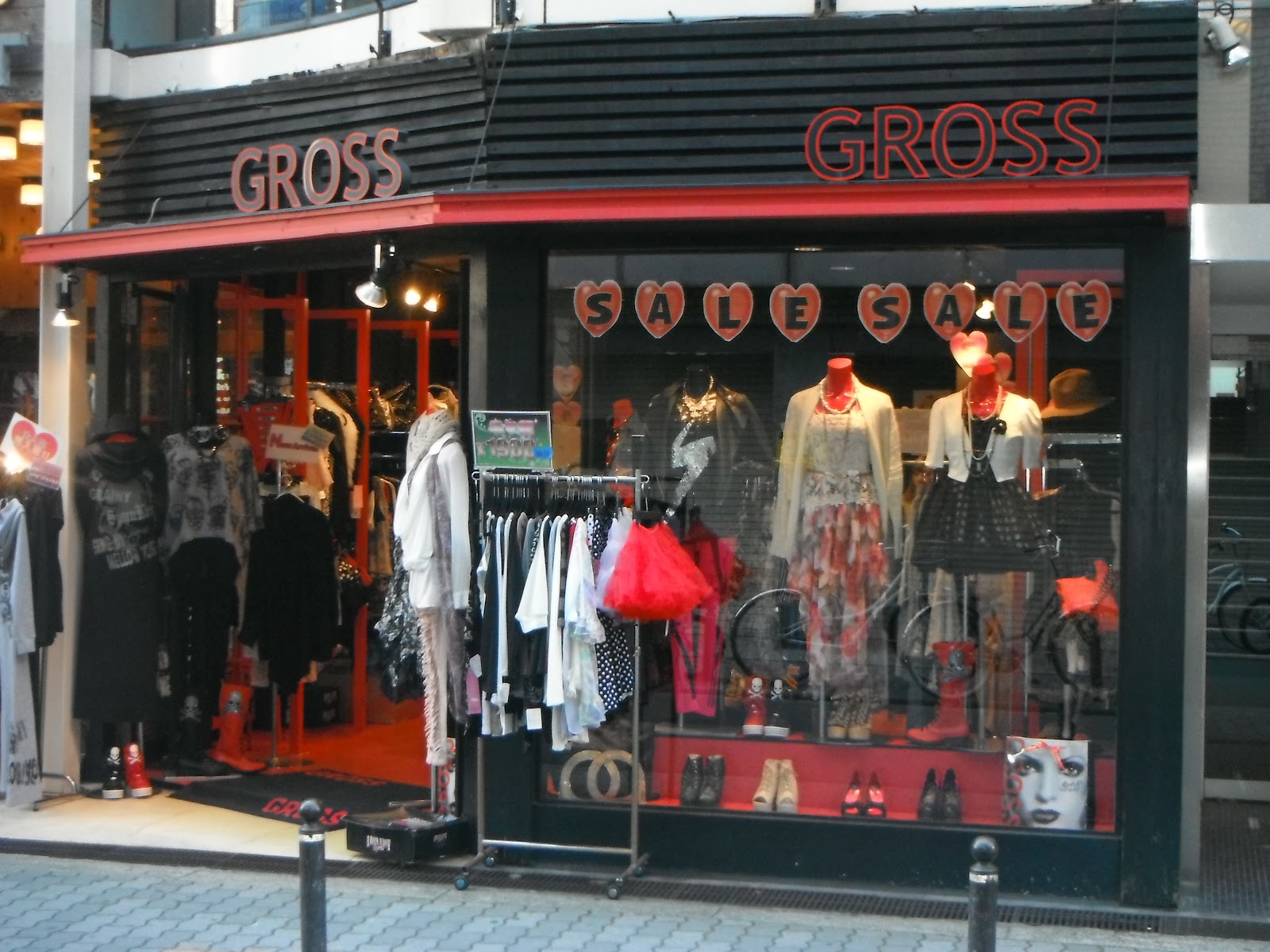
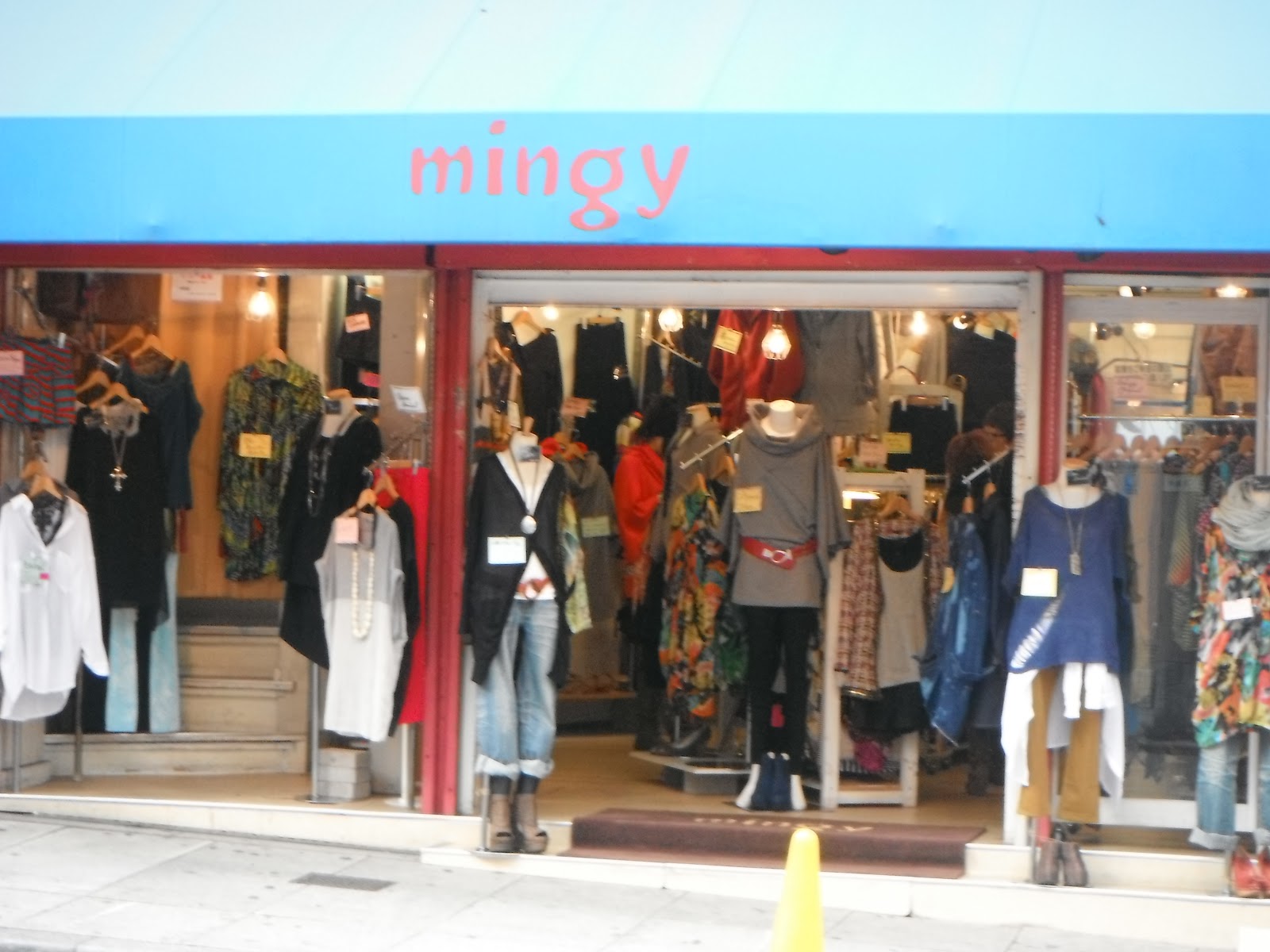
Shop names also get lost in translation in their attempts to use the 'cool' English language. Would you really want to buy clothes at a place called 'Gross'? Or 'Mingy'? Or 'WOMB'?!? And is a hip hop shop called 'Brown Sugar' borderline racist?
The one redeeming factor of Amerika-mura is that, right in the middle of it all, there is a little concrete 'park', where you can sit and people watch. Because it is the people who frequent this place that makes it really interesting. Like Harajuku is to Tokyo, Amerika-mura is Osaka's centre of youth rebellion. For teenagers, Japan is a tough place to be. School sucks. Your parents are strict. You feel pressured to fit in with your friends. The emphasis is always on the good of the group - your class, your family, society. Amerika-mura is one place where you can be an individual - wear what you want, do what you want. Just be yourself. Maybe for the Osaka teenagers who hang out in Amerika-mura, that is their American Dream.

Man checking his phone casually. Wearing amazing outfit.

Girl with pink hair sits outside Womb.

Youth congregating in Ame-mura.
Graffiti murals at Ame-mura.